


At the onset I wish you all a very happy and focused new year!!
We are in the season of new year resolutions but the rate at which they get unfulfilled ensures that I don’t write on new year investing resolutions but just 4 uncommon investing ways which when followed may make a profound effect on your wealth. So let’s read the below 4 points and as you read please put agree or disagree against each point so that you can correct your investment making decision wherever required:
1. Always begin with an end in mind
When we board a flight we know exactly what our destination is, even while driving we use maps to reach our destination but when it comes to investing, we make no real effort towards defining our destination.
This happens because we don’t have a set of written financial goals and hence we don’t tag or categorise our investments into different buckets as per our goals. This may lead to irrational selling and buying at different times and can impact compounding of wealth in a big way.
Having a set of written financial goals with date and amount is a must to optimise your investing experience.
2. Meet the biased investor in you
Due to our past investing experiences or some story we have heard from our family member, neighbour or society we have grown up in, we develop strong perceptions about certain financial products and it is mostly that mindset that dictates our investing decision.
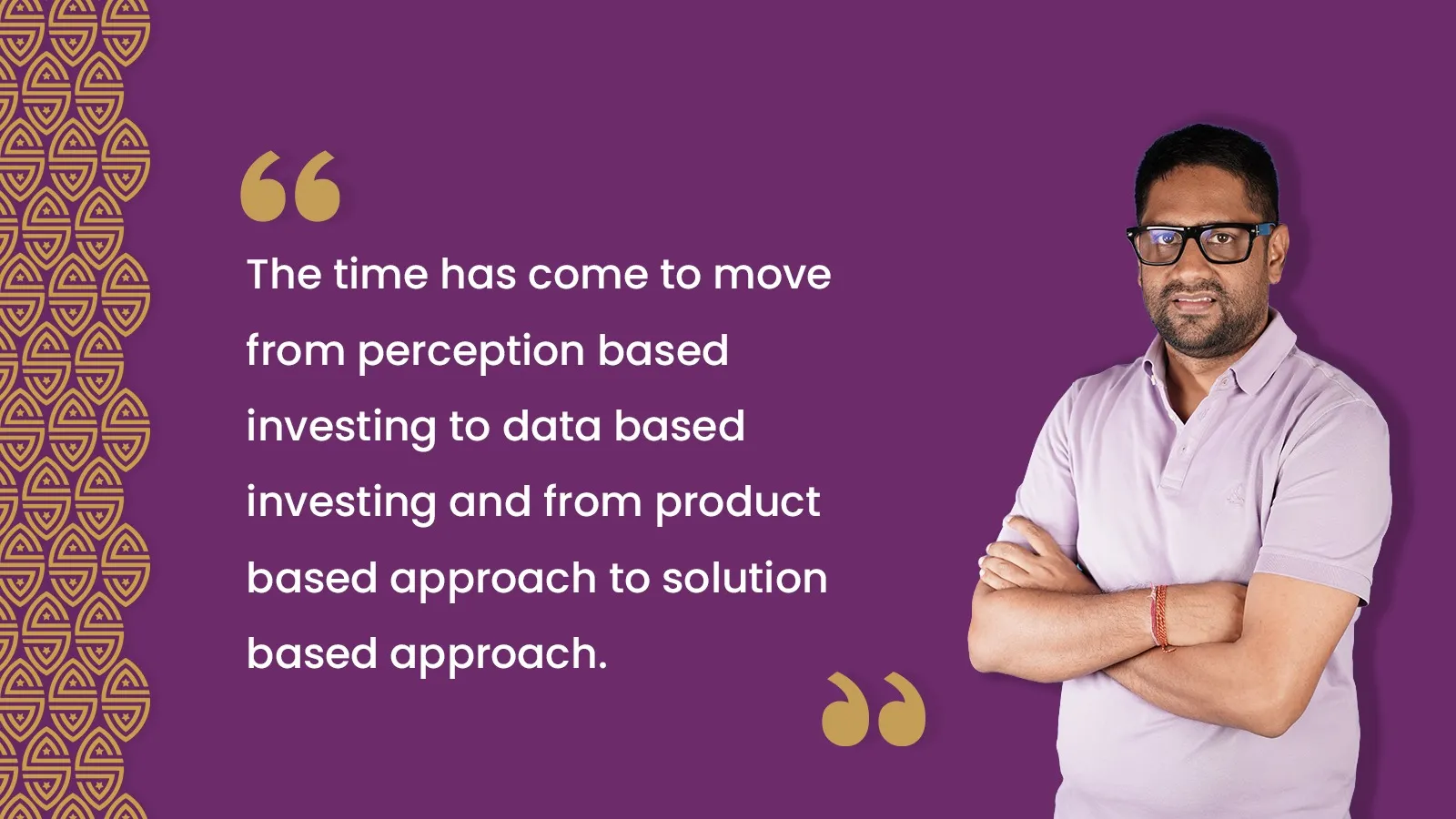
The time has come to move from perception-based investing to data-based investing and from product-based approach to solution-based approach. Hence we need to understand the pros and cons of all investment products without any bias and accordingly take our investment decision.
Also managing one’s investment behaviour is one of the most important elements which aims at creating and compounding wealth and it all starts with you understanding and recognising the biased investor within yourself.
3. Use the same yardstick to compare all investment products
We often hear people saying that I bought this real estate 10/20 years ago at Rs X per unit and today it is Rs 2X or 3X per unit or invest Y amount per year for N number of years and get 2Y/3Y after 15/20 years.
So how does one go about comparing returns from different financial products so that they get a true picture of their investments return?
It is advisable to use CAGR (Compounded Annual Growth Rate) or IRR (Internal Rate of Return) as the benchmark rate to compare investment return across all investment products. It will provide them with the right method to assess the investing experience across investment products.
A note of caution: the results might actually surprise you.
4. Investing is a long-term phenomenon, don’t use short-term returns for investing decisions
I met a new investor at the beginning of 2022 and to my surprise all his money was invested in international equity and tech funds. After doing a deep dive in the investing decision process I understood it was largely driven by the returns in the immediate past which unfortunately is a very common practice among investors where they get lured with the last 1–2 year return of a financial product.
Since investor returns are forward looking, investing just on the basis of immediate past return or because others are investing normally leads to underperformance in the long term.
Hence, it is better to avoid following the herd and remember what is popular can seldom be profitable.
May the year 2023 make you a more focused investor and may you adapt the above 4 unconventional investing ways which may help you to compound your wealth.
Happy New Year!!
Disclaimer
This article is intended solely for educational and informational purposes. It does not constitute investment advice, trading recommendations, or a solicitation to buy or sell any securities or financial instruments. The views expressed are based on publicly available data, regulatory studies, and industry observations, including reports published by the Securities and Exchange Board of India (SEBI). Readers are advised to assess their financial objectives, risk appetite, and suitability before making any investment or trading decisions. Derivatives trading, including Futures & Options (F&O), involves substantial risk and may not be suitable for all investors. Past performance is not indicative of future results. Investors should consult a SEBI-registered investment adviser or other qualified financial professional before acting on any information presented herein.