

The Hidden Factor Sabotaging Your Portfolio
You’ve done everything right—or so you think. Your SIPs are running like clockwork, you’ve mapped out your tax-saving strategies, your spreadsheets look pristine, and monthly reminders to review your capital allocations pop up without fail. Financial apps populate your phone: portfolio trackers, goal calculators, and news alerts. Friends and family see you as the “finance person.” But there’s one question that rarely gets asked, one that hides behind the numbers: Are you investing rationally, or are your emotions hijacking your decisions?
In the world of investing, the narrative frequently revolves around logic, research, and discipline. Yet, emotion is the unseen director—quietly but powerfully influencing every move you make. You might think yourself immune, but unless you have trained yourself to observe, decode, and manage the inner landscape of fear, greed, regret, or even boredom, these very emotions will quietly creep into your portfolio decisions, often with damaging consequences.
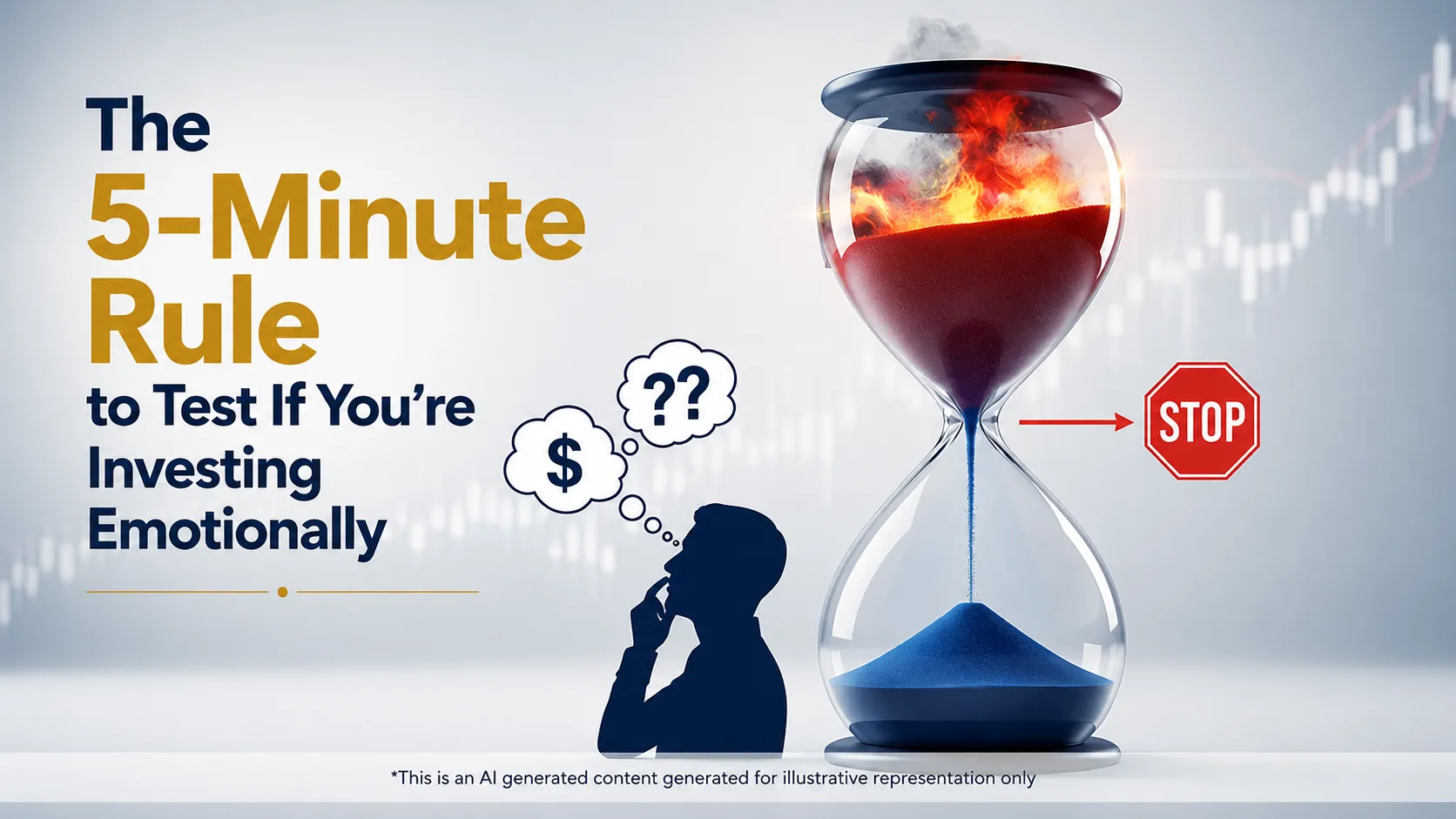
This brings us to a deceptively simple but life-changing tool: The 5-Minute Rule.
With just five deep-reflective questions—each meant to be answered in one minute—you can surface hidden patterns, identify emotional investments, and recalibrate your financial journey toward greater clarity and lasting results. Think of it as an emotional audit for your wealth-building decisions, sharper than any market-timing tool you’ll ever find.
Investing Is More Emotional Than You Think:

The Science Behind Emotion in Investing
Why does emotion rule the markets? The answer traces back to our evolutionary wiring. Behavioral finance—a blend of psychology and economics—teaches us that our brains didn’t evolve for investing success. They evolved for survival: to avoid predators, secure resources, and quickly respond to threats or opportunities.
In the modern context, there are no lions chasing us. The “threats” and “rewards” show up in red and green ticks, headline jolts, WhatsApp groups, and market news. But the emotional circuitry is the same—triggered, impulsive, and often dangerously primitive given the complexities of the financial markets.
The Most Common Emotional Traps
- Loss Aversion
Losing ₹1 typically feels twice as painful as gaining ₹1 feels rewarding. This leads to clinging to underperforming assets, refusing to book losses, or doubling down to avoid admitting defeat. Put simply: We hate to “lose” more than we love to “win.” - Herd Mentality
Humans are social animals. When everyone is rushing toward the next “hot” stock or mutual fund, we instinctively believe there must be wisdom in the crowd. In reality, following the herd often means missing out on original opportunities and buying high, selling low. - Overconfidence
“I’ve done my research. I’m different.” Most of us overestimate our investing abilities and the accuracy of our predictions. Overconfidence leads to risky bets, overtrading, and ignoring red flags. - Recency and Availability Biases
When recent news or events weigh more heavily than statistically warranted, we are prone to panic selling after a correction or euphoric buying after a bull run. What’s emotionally available, not mathematically probable, wins the mental game.
Data Speaks Louder Than Theory
Indian market statistics make this plain: Retail investors often pile into equities AFTER big rallies—when valuations are high—chasing euphoria and exit in droves during corrections, cementing losses. The result is not wealth creation, but the very opposite.
Unpacking the 5-Minute Rule: The Framework for Emotional Clarity
The 5-Minute Rule is not about outperforming the market; it’s about outperforming your own bias. The discipline lies in the simple act of pausing, reflecting, and answering five key questions before you invest, rebalance, or even panic.
Here are the five questions—and why each one is a window into your subconscious motives.
Question 1: “If this investment dropped 20% tomorrow, what would I do?”
This tests conviction. Are you in for the right reasons, or is your decision built on sand? If your instinct is to “sell instantly,” your investment thesis may be weak or trend-based, not fundamental. If your first feeling is “hold, or buy more,” perhaps the decision is backed by research and long-term thinking.
Emotion flags:
- Impatience (“I didn’t sign up for this volatility!”)
- Fear of being wrong (“What will others say?”)
- Herd Panic (“Everyone else is exiting, I should too!”)
Question 2: “If this asset didn’t move for a year, would I still hold it?”
This analyzes your appetite for stillness and patience. Are you investing for results or for constant excitement? Wealth creation is silent and slow. If stagnation makes you fidgety, you may be trading out of anxiety—reactive, not strategic.
Emotion flags:
- Boredom-driven churn.
- Over-monitoring.
- Compulsive need for action.
Question 3: “Am I hoping this will ‘make up’ for another poor decision?”
This is the “revenge investing” trap. Trying to claw back prior losses almost always backfires. Markets do not know you, your hurt feelings, or your imagined “luck.” Instead of healing, this approach results in higher risks and poorer decisions.
Emotion flags:
- Regret as a motivator.
- Exaggerated risk-taking.
- Anchoring to sunk costs.
Question 4: “Would I buy this today at this price?”
Strip away your entry price, current returns, or stories from the past. If you wouldn’t buy now, you’re likely holding due to emotional inertia—unwilling to admit a poor call or sentimentally attached to “old winners.”
Emotion flags:
- Sunk cost fallacy.
- Emotional attachment over strategic analysis.
- Justifying inertia.
Question 5: “Did I research this, or just read about it on social media or a friend’s WhatsApp group?”
The modern world drowns us in hot tips, viral lists, and trending screenshots. How much of your portfolio reflects authentic, hard-won research versus borrowed conviction? If your answer is “I saw it everywhere!”—beware.
Emotion flags:
- Fear of missing out (FOMO).
- Over-reliance on others’ opinions.
- Shallow information diet.
Why Five Questions?
Five dimensions, five minutes, zero excuses. This compact self-interview shines a sharp light on motives hidden behind “rational” spreadsheets and forces you to re-anchor decisions in objectivity and self-awareness.
Why Even Professionals and High Earners Aren’t Immune

One might assume that higher income and higher education in professionals would automatically translate into better investing discipline. But the truth is far more nuanced.
The Paradox of Professional Vulnerability
- Time-starved judgment:
Between demanding jobs, family needs, EMIs, social obligations, and aspirations, most professionals lack time to deeply research each financial choice. They substitute robust inquiry for “what’s trending” on WhatsApp or what a peer is doing. - Risk tolerance vs. risk capacity:
A decent paycheck may embolden you to take “some risk,” but there isn’t always enough capital or time buffer to recover from major mistakes. - Brilliant rationalizations:
The smartest professionals are often too clever, constructing elaborate explanations for emotionally-based moves—a cognitive trap to watch for.
In these circumstances, the 5-Minute Rule acts as your “rational circuit breaker”—a pause that’s more valuable than any algorithm or hot tip in a bull market.
Emotional vs. Rational Investing—A Case Study
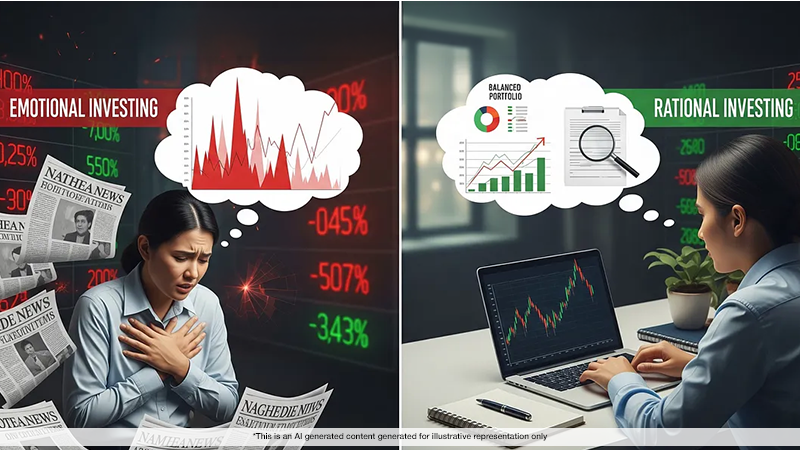
Let’s meet two archetypal investors:
Investor A: The Emotionally Triggered Investor
- Saw friends profit in a mid-cap rally. Bought heavily after a stellar 50% run-up.
- A 15% correction led to panic—exited quickly to “avoid further damage.”
- Feeling aggrieved, plunged into trending thematic funds, fueled by an itch to “make up” for the last loss.
- Rinse, repeat: Exciting portfolio, but chronic underperformance, stress, and no real compounding.
Investor B: The Rational Investor—Using the 5-Minute Rule
- Starts with goals, allocation rules, and a personal risk map.
- Reviews new or existing positions with the 5-Minute Rule, not just the news flow.
- Market corrections do not trigger knee-jerk reactions—planned volatility is “normal.”
- Avoids revenge or redemption trades. Reviews portfolios quarterly—detached, not reactive.
- Over time: Portfolio is dull, perhaps—but stable, consistently compounding, and stress-free.
Outcome: Over five years, Investor A’s portfolio creates more drama than wealth. Investor B’s discipline, “boring” as it seems, delivers steady results. The difference? Not luck, but a system—a ritual of emotional self-awareness.
The Very Real Cost of Ignoring Emotion
This is not philosophy; it’s math. World-class research—like Dalbar’s annual studies—consistently shows that average investor returns lag the market’s returns, not because markets are inefficient, but because investors are.
One of the most common ways emotional bias quietly damages long-term outcomes is by disrupting discipline during market stress. This pattern is explored in depth in Pausing SIP is the Worst Move An Investor Can Make, where we examine how fear-led pauses during downturns permanently weaken compounding—even for experienced investors.
The Return Gap—A Silent Wealth Killer
In India, studies show that the “return gap” (difference between average mutual fund returns and the actual returns realized by investors) typically ranges from 1.5% to 2.5% annually. The reason? Poor market timing—chasing performance, panicking at corrections, and letting headline triggers drive moves.
Let’s Do the Math:
Suppose two investors both put ₹10 lakhs into the market for 20 years.
- Investor X: Achieves average market return of 12% per year.
- Investor Y: With just a 2% behavioral gap, achieves 10% per year.
Over two decades, Investor X ends up with over ₹96 lakhs, while Investor Y—whose only mistake was emotional decision-making—ends with just ₹67 lakhs. That’s a ₹29 lakh gap. Factor in education costs, retirement, or medical needs, and the cost of emotional investing can become a life-altering burden.
Building Emotional Hygiene Into Your Financial Life
If emotional investing is the illness, zero emotion is not the cure—emotional hygiene is. You need clear habits, rituals, and a support structure to create lasting wealth with clarity.
Six Steps to Emotional Hygiene
- Investment Journaling
Before making any substantial investment (or exit), jot down your rationale. Six or twelve months later, revisit those notes. Did the thesis pan out? Was the motive sound? This not only uncovers hidden emotional drivers but also builds learning loops. - Pause Windows
Decide that, for all non-automated transactions, you’ll wait 48 hours before acting. This delay creates enough distance for emotions to subside and rationality to prevail. - Automate What You Can
Systematic Investment Plans (SIPs) are the world’s simplest emotional circuit breaker. They neutralize market timing anxiety, enforce discipline, and reduce temptation to tinker.
Emotional clarity must eventually translate into structured action. Beyond resisting impulsive moves, disciplined investors use market volatility to realign their portfolios thoughtfully. This process is explained in Rebalancing: The Understated Discipline That Keeps Portfolios Healthy, which shows how rational investors respond to market swings without abandoning their long-term plan.
- Quarterly, Not Daily, Reviews
If you check your equity portfolio daily, you’ll encounter at least 200 days a year when it’s down. Quarterly reviews align focus with long-term plans—not news cycle volatility. - Have a Financial Confidante or Mentor
Find someone you trust—who won’t echo your fears or chase your highs—to sanity-check your thought process. They don’t have to be a certified advisor, but they must be objective. - Cultivate Content Hygiene
Filter out noise. Choose reliable sources, unsubscribe from “hot tips” WhatsApp groups, and develop a system to validate information before it colors your decisions.
Why a Guided Partner Like SubhShanti Wealth Strengthens Your Rational Edge
Behind every consistent investor, there’s usually a wise sounding-board—not just a number cruncher, but a steadying hand. That’s the role SubhShanti Wealth plays—both in expertise and in emotional discipline.
SubhShanti’s Approach: Tactical and Behavioral
- Clarity-First Conversations
We begin by listening. We want to know your story, dreams, scar tissue, and money beliefs—not just your income, age, and risk score. This allows us to guide you through the lens of your life, not industry benchmarks. - Customized, Evolving Roadmaps
Your portfolio is as unique as your DNA. Cookie-cutter allocation is a recipe for regret. We build roadmaps that flex with your circumstances, your aspirations, and your temperament. - Built-in Behavioral Coaching
Portfolio reviews go beyond returns. We look for emotional “tells”: signs of regret selling, over-trading, or anchoring. And we nudge you, gently but firmly, back along the rational path. - Noise-Reduction Protocols
With so much financial chatter, your greatest “return” may come from what you ignore, not what you chase. We help clients shield their minds from unreliable noise—training them to weigh evidence over emotion. - Psychology-Informed Tools
Pre-decision checklists. Post-transaction reviews. Structured routines for impulse control. Our “toolkit” is designed not only to build returns, but to build your resilience and conviction.
Our Mission: To be your partner in clarity. To turn anxiety into structure, noise into insight, and impulses into disciplines. Wealth is created not just by good investments—but by good investors.
Final Thoughts: Use The 5-Minute Rule—And Invest With Eyes Wide Open
Emotion is not your enemy—unseen, unchecked emotion is. The 5-Minute Rule isn’t a gimmick; it is a daily mirror. Five questions, five minutes, and the courage to be honest—this is your edge in a world that wants you to be hurried, harried, and reactive.Make it a habit. Use it honestly. Encourage those you care about to try it too. And remember:
If you do feel lost, overwhelmed, or unsure—don’t walk alone. Seek out a confidante, a mentor, or a professional guide like SubhShanti Wealth. Because in investing, as in life, clarity compounds. And when logic and emotion work hand-in-hand, that’s when real, lasting wealth is born.
Disclaimer
This article is intended solely for educational and informational purposes. It does not constitute investment advice, trading recommendations, or a solicitation to buy or sell any securities or financial instruments. The views expressed are based on publicly available data, regulatory studies, and industry observations, including reports published by the Securities and Exchange Board of India (SEBI). Readers are advised to assess their financial objectives, risk appetite, and suitability before making any investment or trading decisions. Derivatives trading, including Futures & Options (F&O), involves substantial risk and may not be suitable for all investors. Past performance is not indicative of future results. Investors should consult a SEBI-registered investment adviser or other qualified financial professional before acting on any information presented herein.