

Think of your investment portfolio like a perfectly balanced meal on your plate. You start with the right portions – maybe 60% vegetables (stocks), 30% protein (bonds), and 10% carbs (cash). But as time passes, that hearty portion of vegetables grows bigger while the protein shrinks. Your once-balanced meal now looks lopsided, and that’s exactly what happens to your investments without rebalancing.
What Exactly Is Portfolio Rebalancing?
Portfolio rebalancing is simply the art of bringing your investments back to their original proportions. It’s like being the chef of your own financial kitchen – periodically adjusting the ingredients to maintain that perfect recipe you started with.
When you first invest, you might decide on a mix like 70% stocks and 30% bonds. But markets are moody creatures. Sometimes stocks party hard and grow faster, while bonds sit quietly in the corner. Before you know it, your 70-30 split might become 80-20 or even 85-15, completely changing your risk profile.
Why Should You Care About This Balancing Act?
Risk Control: Your Financial Safety Net
The primary reason for rebalancing is risk control. When one asset class grows too large, it can turn your conservative portfolio into a roller coaster ride. Imagine planning for a gentle bicycle ride but accidentally signing up for a motorcycle race – that’s what happens when your portfolio drifts from its intended allocation.
The “Buy Low, Sell High” Magic
Rebalancing forces you to do what every investor dreams of but rarely executes: buying low and selling high. When you sell some of your high-performing stocks to buy underperforming bonds, you’re essentially taking profits from winners and investing in potential comebacks
This is where mutual funds quietly reveal their real strength. As we explored in Things You Didn’t Know Mutual Funds Could Do (But They Can), these instruments aren’t just about returns—they’re designed to be actively used, optimized, and repositioned. Rebalancing is one of the disciplines that unlocks this hidden flexibility.
Peace of Mind
Regular rebalancing gives anxious investors something constructive to do instead of making emotional decisions during market turbulence. It’s like having a predetermined action plan that removes the guesswork and emotional stress from investing.
How Does This Financial Magic Work?
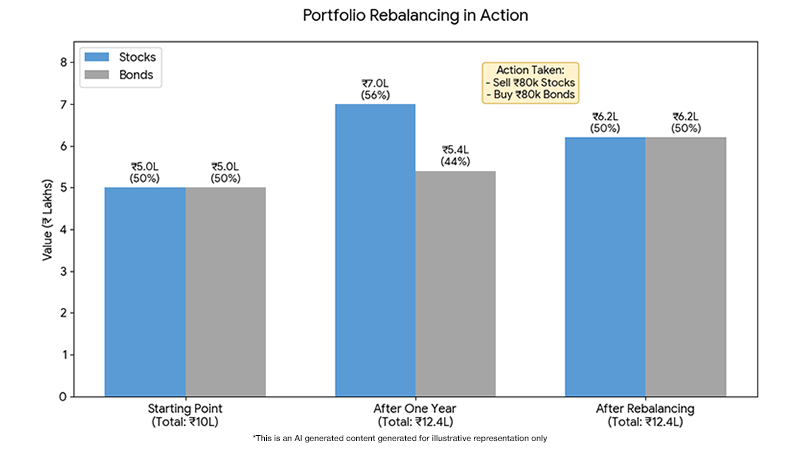
Let’s walk through a simple example that shows rebalancing in action :
Starting Point:
- ₹5 lakh in stocks (50%)
- ₹5 lakh in bonds (50%)
- Total portfolio: ₹10 lakh
After One Year:
- Stocks grew to ₹7 lakh
- Bonds grew to ₹5.4 lakh
- New total: ₹12.4 lakh
- Current allocation: 56% stocks, 44% bonds
Rebalancing Action:
- Target: 50% of ₹12.4 lakh = ₹6.2 lakh in each asset class
- Sell ₹80,000 worth of stocks
- Buy ₹80,000 worth of bonds
- Restored balance: 50-50 split
This process ensures your portfolio stays aligned with your original risk tolerance and investment goals.
When Should You Rebalance?
Calendar-Based Approach
Most experts suggest rebalancing every 6-12 months. This approach is simple, cost-effective, and prevents you from constantly tinkering with your investments. Mark your calendar twice a year – perhaps during your birthday and six months later – to review and rebalance.
Threshold-Based Approach
Some investors prefer rebalancing when allocations drift by a specific percentage, such as 5-10% from the target. This method is more responsive to market changes but requires more monitoring.
Simple Tips for Rebalancing Success
Start Small and Stay Consistent
You don’t need a complicated portfolio to benefit from rebalancing. Even a simple two-asset portfolio of stocks and bonds can benefit from this discipline.
Use Financial Experts to Your Advantage
Financial experts suggest an easy way to stay on top of rebalancing: just set a recurring calendar reminder. This lets them handle the complex work while you stay focused on your long-term goals.
Don’t Obsess Over Perfect Timing
Rebalancing isn’t about timing the market perfectly – it’s about maintaining discipline. The goal is staying on track with your investment plan, not maximizing every possible return.
Consider Tax Implications
When rebalancing in taxable accounts, be mindful of potential tax consequences from selling appreciated assets. Consider using new contributions to rebalance before selling existing investments.
A Simple Case Study: Meet Priya’s Rebalancing Journey
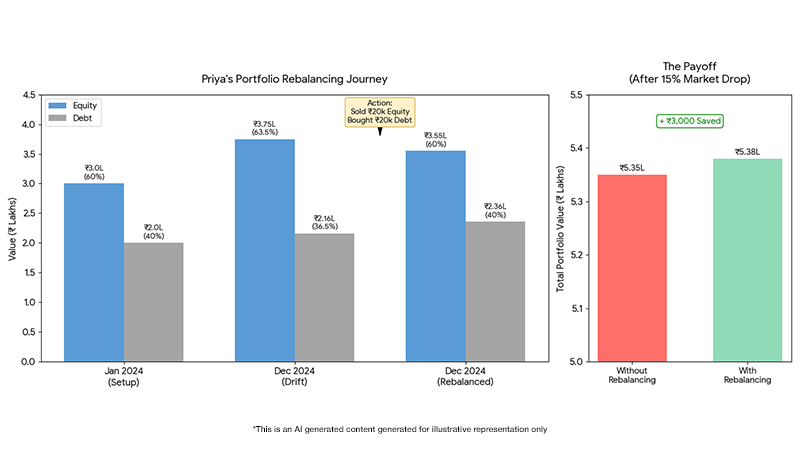
Let’s follow Priya, a 32-year-old from Mumbai, who discovered the power of rebalancing through a real-world experience.
The Setup: January 2024
Priya started with ₹5 lakh invested in a balanced portfolio :
- Equity funds: ₹3 lakh (60%)
- Debt funds: ₹2 lakh (40%)
The Drift: December 2024
After 11 months, markets performed well. Her equity funds grew 25% while debt funds gained 8% :
- Equity funds: ₹3.75 lakh
- Debt funds: ₹2.16 lakh
- New split: 63.5% equity, 36.5% debt
Problem: Portfolio became riskier than intended
The Fix: Rebalancing Action
Priya brought her portfolio back to the original 60-40 split :
- Sold: ₹20,000 worth of equity funds
- Bought: ₹20,000 worth of debt funds
- Result: Back to 60% equity, 40% debt
The Payoff: Three Months Later
When markets dropped 15%, her rebalancing paid off :
- Without rebalancing: Portfolio would be worth ₹5.35 lakh
- With rebalancing: Portfolio worth ₹5.38 lakh
- Savings: ₹3,000 + better positioning for recovery
The Lesson
Priya’s simple annual rebalancing routine helped her :
- Stay true to her risk tolerance
- Lock in profits from winning investments
- Position herself to benefit from market corrections
Sometimes the most powerful financial strategies are also the simplest ones.
When rebalancing is ignored, the impact often shows up quietly—through inconsistent performance and falling year-over-year numbers. In fact, many of the scenarios discussed in Things to Do If Your Year on Year Returns Are Declining trace back to portfolios that drifted unchecked for too long.
How SubhShanti Wealth Makes Rebalancing Effortless
While rebalancing might seem straightforward in theory, executing it consistently requires expertise, time, and emotional discipline – areas where SubhShanti Wealth excels as your trusted financial partner.
Professional Portfolio Monitoring
SubhShanti Wealth leverages cutting-edge financial tools and platforms to provide clients with real-time portfolio monitoring and performance tracking. Instead of manually checking your investments every few months, their technology continuously watches your portfolio allocations, alerting you when rebalancing becomes necessary.
Structured Review Process
The firm follows a systematic approach that includes profiling, strategy development, regular reporting, and comprehensive portfolio reviews. This structured process ensures that rebalancing decisions align with your changing life circumstances and financial goals.
Expert Guidance Without Emotional Bias
One of the biggest challenges individual investors face is making unemotional rebalancing decisions. SubhShanti Wealth’s team of financial experts provides personalized opinions that removes emotional decision-making from the equation. They recommend mutual funds across various asset classes to create and maintain balanced portfolios through disciplined rebalancing.
Comprehensive Wealth Management
Beyond simple rebalancing, SubhShanti Wealth offers integrated services including tactical allocation, portfolio optimization, and risk management. This holistic approach ensures that rebalancing decisions consider your entire financial picture, including cash flow management, tax planning, and long-term wealth creation goals.
Transparent Communication and Ongoing Support
The firm believes in transparent communication and ethical business practices, providing regular updates on portfolio performance and rebalancing activities. Their goal-based financial planning approach ensures that every rebalancing decision serves your specific objectives, whether it’s retirement planning, education funding, or wealth transfer.
The Bottom Line
Portfolio rebalancing might seem like financial jargon, but it’s really just good housekeeping for your investments. Like tidying up your home regularly prevents it from becoming chaotic, rebalancing prevents your portfolio from straying too far from your intended path.
The beauty of rebalancing lies in its simplicity – it removes emotion from investment decisions and replaces it with a systematic approach. While markets will continue their unpredictable moves, your disciplined rebalancing strategy ensures your portfolio stays aligned with your financial goals and risk tolerance.
Remember, successful investing isn’t about finding the perfect stock or timing the market flawlessly. It’s about maintaining a sensible strategy consistently over time, and rebalancing is one of the most understated yet powerful tools in your investment toolkit. With professional partners like SubhShanti Wealth handling the technical aspects and emotional challenges of rebalancing, you can focus on what matters most – achieving your long-term financial goals.
Disclaimer
This article is intended solely for educational and informational purposes. It does not constitute investment advice, trading recommendations, or a solicitation to buy or sell any securities or financial instruments. The views expressed are based on publicly available data, regulatory studies, and industry observations, including reports published by the Securities and Exchange Board of India (SEBI). Readers are advised to assess their financial objectives, risk appetite, and suitability before making any investment or trading decisions. Derivatives trading, including Futures & Options (F&O), involves substantial risk and may not be suitable for all investors. Past performance is not indicative of future results. Investors should consult a SEBI-registered investment adviser or other qualified financial professional before acting on any information presented herein.